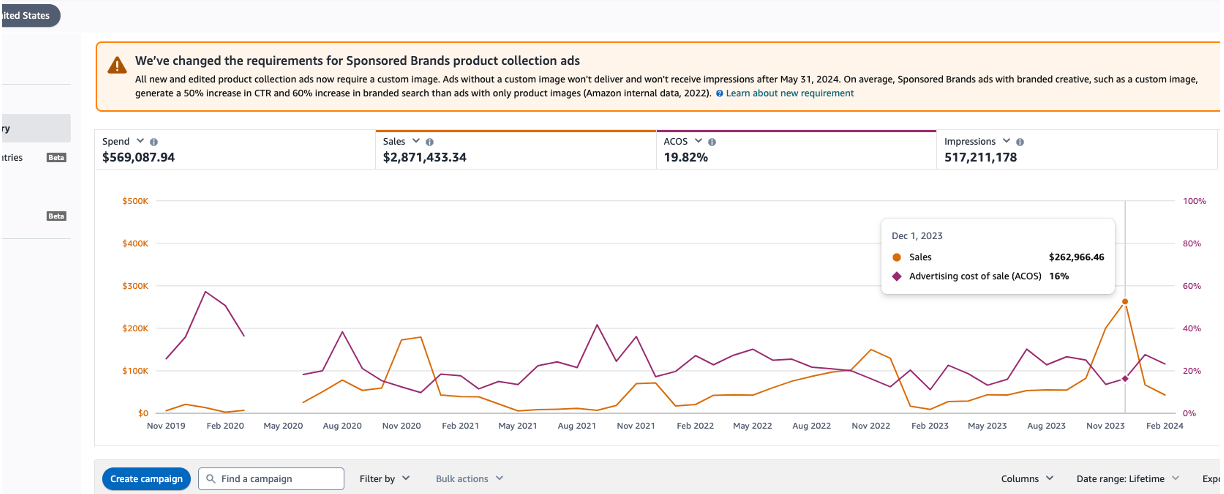
This case study shows how product-focused strategy and aggressive scaling can drive record-breaking year-over-year growth even when facing stock challenges.
We began managing this account at the end of June 2023 with one clear goal: scale the account profitably and beat last year's performance. We had five months to build the foundation before the critical holiday season.
By November and December, the account hit its highest-ever PPC sales. We didn't just grow—we doubled year-over-year revenue while managing through stock issues and maintaining profitability.
The Outcome
Highest-ever PPC sales in Nov and Dec.
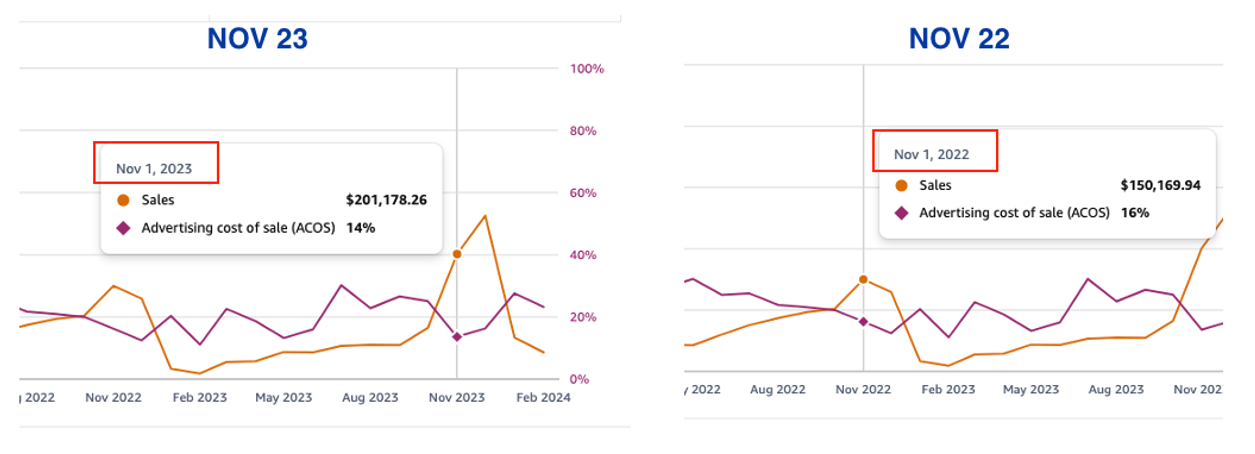
November Results
- ✅ 34% YoY increase in PPC sales (from $150K to $201K—adding $51K)
- ✅ ACOS improved by 2%, showing more efficient growth
- ✅ 238% increase in ad impressions YoY
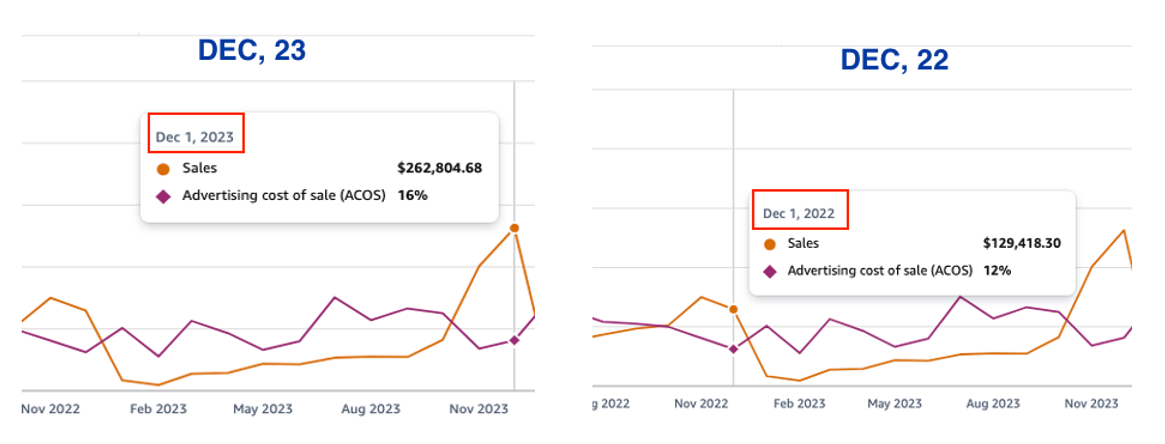
We scaled it up further to a 104% increase YoY in Dec, with sales going from $129K to $263K (+$133K), with a 4% increase in ACOS.
December Results
- ✅ 104% YoY increase in PPC sales (from $129K to $263K—adding $133K)
- ✅ This was the highest monthly PPC revenue increase in the account's history
- ✅ 466% increase in ad impressions YoY
- ✅ Click-to-sales conversion rate up 90%, with improved relevancy
Overall Impact
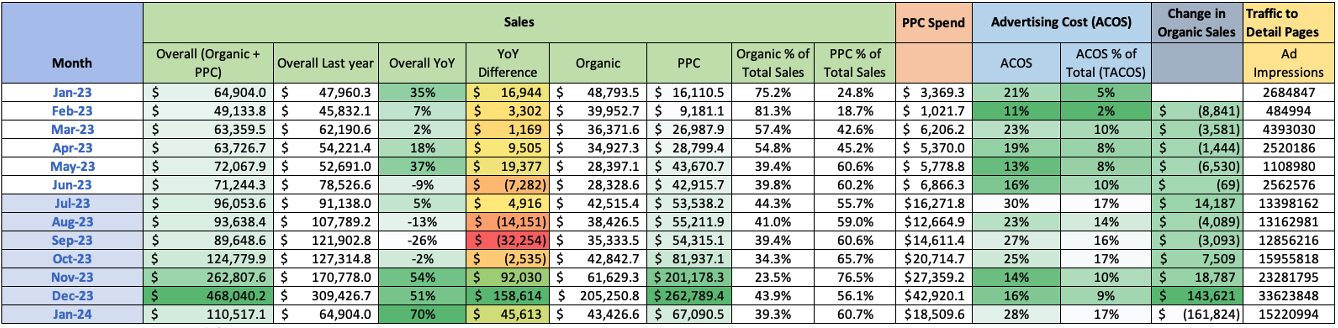
- ✅ 50–70% increase in total sales (PPC + Organic) compared to same period last year
- ✅ Up to $158K in additional monthly revenue versus last year
- ✅ Account positioned as category leader with dramatically improved visibility
How We Did It
We started managing this account in July 2023, with the goal of growing the YoY sales profitably and maximizing impact in Q4.
The First Month: Exploring Opportunities to Grow
We first delved into a comprehensive analysis of products and campaign setups, uncovering missed opportunities. Benchmarking tests showed the potential for a higher market share, while ad reports signalled the need for improved ad impression capture and reach.
We took a more aggressive approach in July to fuel new campaign momentum and gather actionable data and insights.
This aggressive first month gave us the insights we needed to double down on what worked when it mattered most.
Months 2-4: Managing Through Stock Challenges
The next 3 months brought a major obstacle—key products started going out of stock. This could have affected our Q4 momentum, but we adapted:
- Created a stock-level analysis and reallocated budgets based on available inventory
- Prevented overspending on products with limited stock but strong organic sales (no need to pay for traffic that would sell out anyway)
- Shifted ad spend to in-stock products to maintain overall account growth
- Our product-level approach let us manage this efficiently without losing momentum
By October, stock was stabilizing and we were ready to scale hard into the holiday season.
Campaign Structure for Scale
We rebuilt the campaign structure to support aggressive, profitable scaling:
- Separated each product into dedicated campaigns for precise budget and bid control
- Segmented campaigns by target relevance (generic to highly relevant), keeping keyword density under 20 targets per campaign for maximum exposure
- Split by match type (broad, phrase, exact) to control spend and prevent broad campaigns from eating exact match budgets
- We also launched a few single-keyword focused ranking campaigns
This structure gave us the control we needed to scale fast without blowing up ACOS.
Data-Driven Target Selection
We used ad reports to separate high performers from wasted spend:
- Pulled top-performing keywords and ASINs into dedicated high-budget campaigns—these became our Q4 revenue drivers
- Found non-converting search terms (especially from auto and broad) and added them as negatives immediately to stop the bleeding
- Set up harvesting campaigns to continuously mine new keyword opportunities from auto and broad match data
- Researched competitors in each product category and implemented offensive targeting on competitor ASINs where we had advantages (better reviews, features, or pricing)
Every targeting decision was backed by performance data, not hunches.
Smart Budget Allocation Across Ad Types
We allocated budget based on what delivered the best ROI for this specific brand:
- Put over 85% of budget into Sponsored Products—consistently the highest ROI ad type
- For this premium toy brand, product quality and features needed to be communicated visually, so we invested in Sponsored Brand Video campaigns to show the products in action
- This combination of high-ROI Sponsored Products with compelling video creative drove both conversions and brand perception
Ongoing Optimization Process
We didn't set it and forget it—optimization happened every week:
- Updated bids every 3–7 days based on performance and competitive pressure
- Maintained a continuous keyword funnel from research to ranking, constantly feeding new opportunities into campaigns
- Ran weekly negative keyword audits, especially for broad, phrase, and auto campaigns to prevent spend leakage
- Used budget rules plus manual adjustments to prevent campaigns from going out of budget while maximizing impression share
Regular optimization kept performance improving week after week.
Forecasting for Peak Season
We used historical data to prepare for the holiday surge:
- Analyzed prior-year performance to anticipate demand spikes around Q4 shopping events
- Combined historical trends with current data to adjust budgets and bids proactively
- Scaled aggressively into high-demand periods when we knew conversion rates would be strong
Being ready for peak season meant we captured maximum revenue when demand was highest.
Leveraging Features and Updates: Adapting to Change
We always keep up with the latest updates and used those levers. We essentially leveraged:
- Contextual Targeting: finding the right people to show our ads to, based on what they're interested in.
- Retargeting: showing ads to people who have seen our products before but didn't buy anything.
- Brand Analytics Tools: like the search query dashboard, customer loyalty dashboard, brand metrics, and category insights, which give us more information to make better decisions.
Staying ahead of platform updates gave us an edge over competitors.
The results speak for themselves. Despite stock challenges mid-year, we delivered the account's best year-over-year performance. November saw a 34% YoY increase, and December doubled the previous year with a 104% increase—adding $133K compared to last December.
Key Takeaway: Peak season success takes months of preparation, smart scaling, and the ability to adapt when challenges hit.