This case study shows how strategic campaign optimization and efficient scaling can drive exceptional growth while improving profitability.
When we took over this account in March 2024, the brand was doing around $900K monthly and looking to grow revenue. The campaigns were running, but there was no clear strategy to scale efficiently.
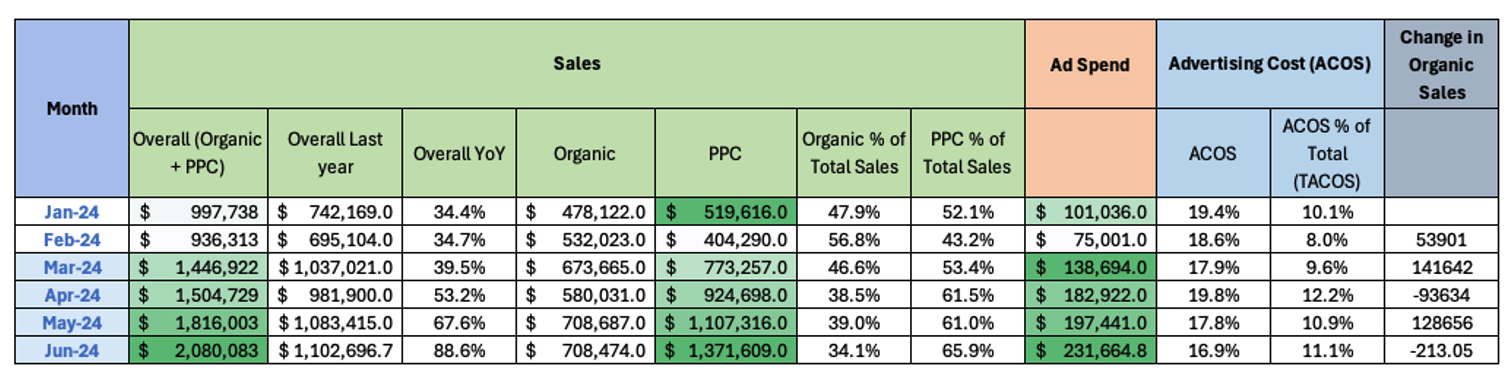
Within three months, we more than doubled monthly revenue to over $2M while improving ACOS from 17.9% to 16.9%.
The Outcome
Overall Impact (March–June):
- ✅ Grew monthly sales from $1.45M to $2.08M—a 43% increase in just 3 months
- ✅ PPC sales nearly doubled from $773K to $1.37M
- ✅ ACOS improved from 17.9% to 16.9% despite aggressive scaling
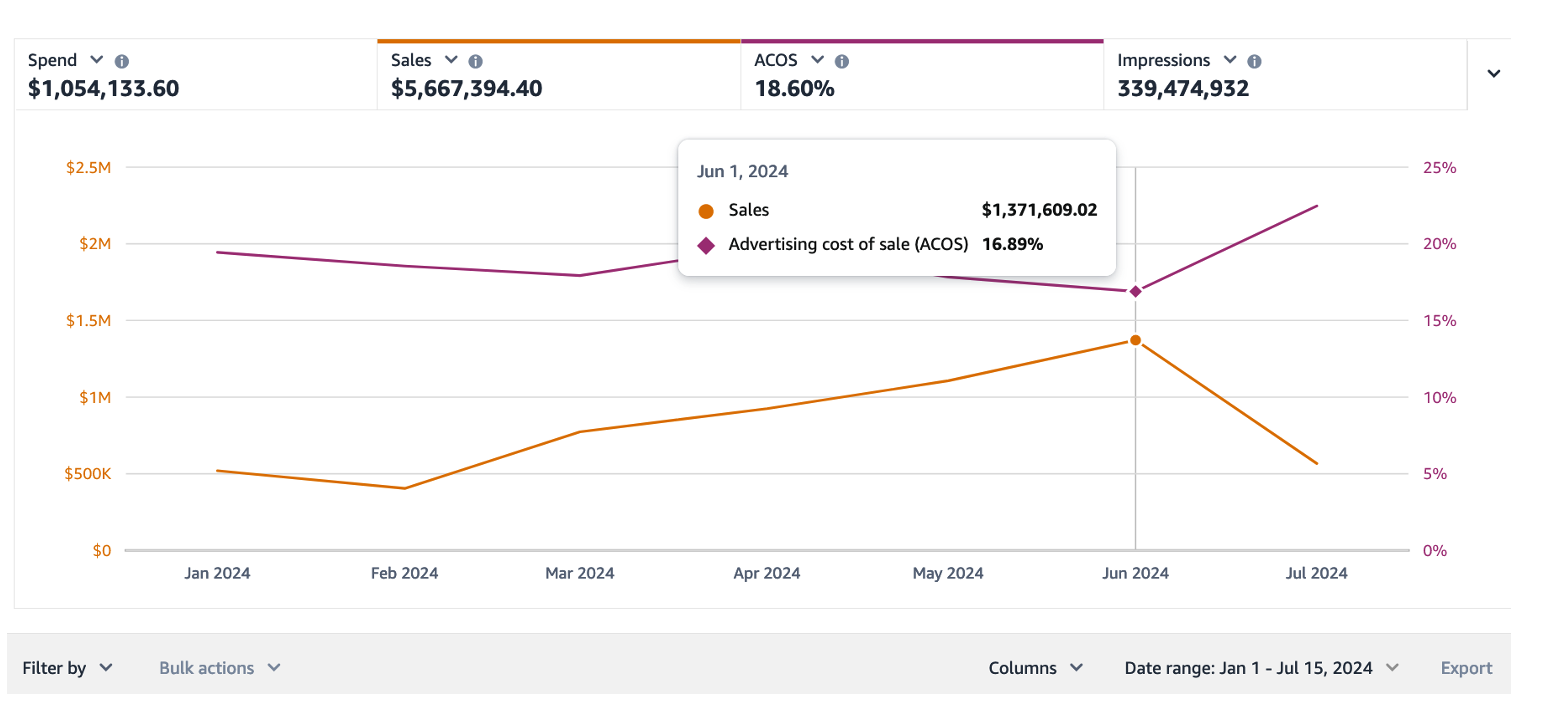
- ✅ Generated over 339M ad impressions
- ✅ Drove substantial organic growth (+$128K in June alone)
The account went from steady performer to explosive growth. And we did it profitably.
Overall Summary
Ad Performance
First 3 Months (March–May 2024):
- ✅ Scaled from $1.45M to $1.82M in monthly sales
- ✅ PPC sales grew from $773K to $1.11M
- ✅ YoY growth accelerated from 39.5% to 67.6%
- ✅ ACOS ranged 17.8–19.6%, averaging around 18.4%
Months 4–5 (June–July 2024):
- ✅ Hit $2.08M in monthly sales by June (+88.6% YoY)
- ✅ PPC sales reached $1.37M
- ✅ ACOS improved to 16.9% while scaling
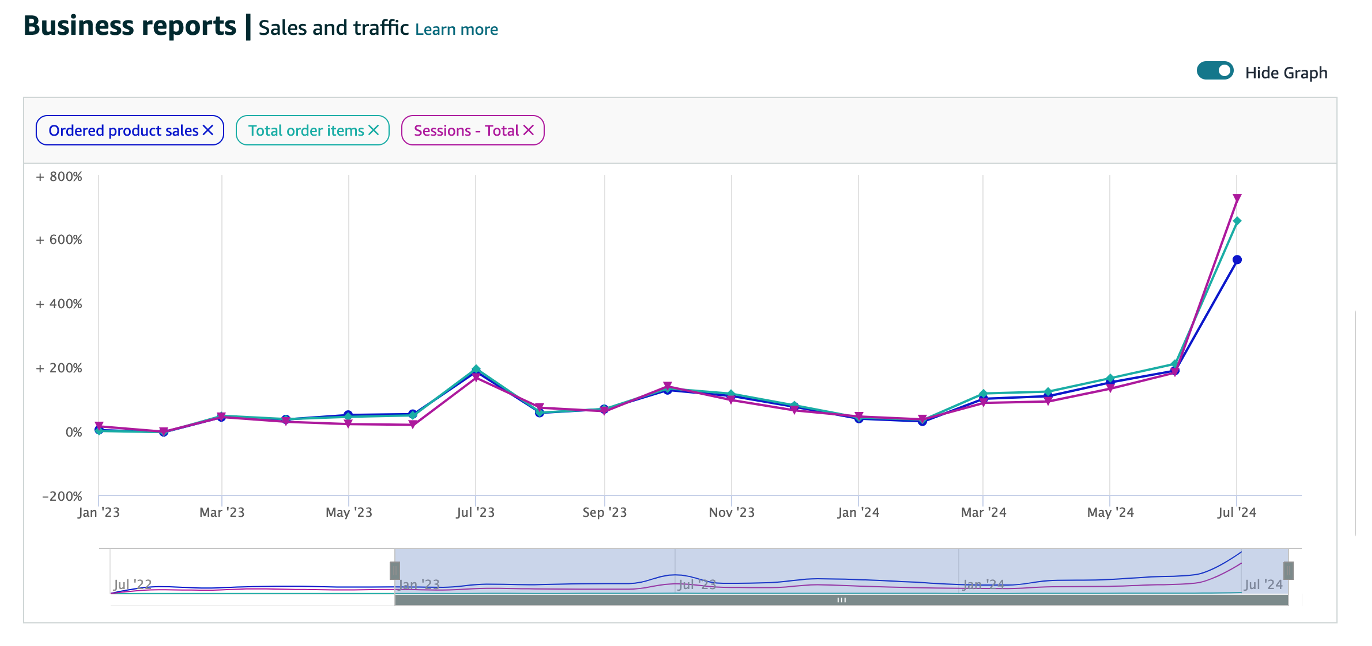
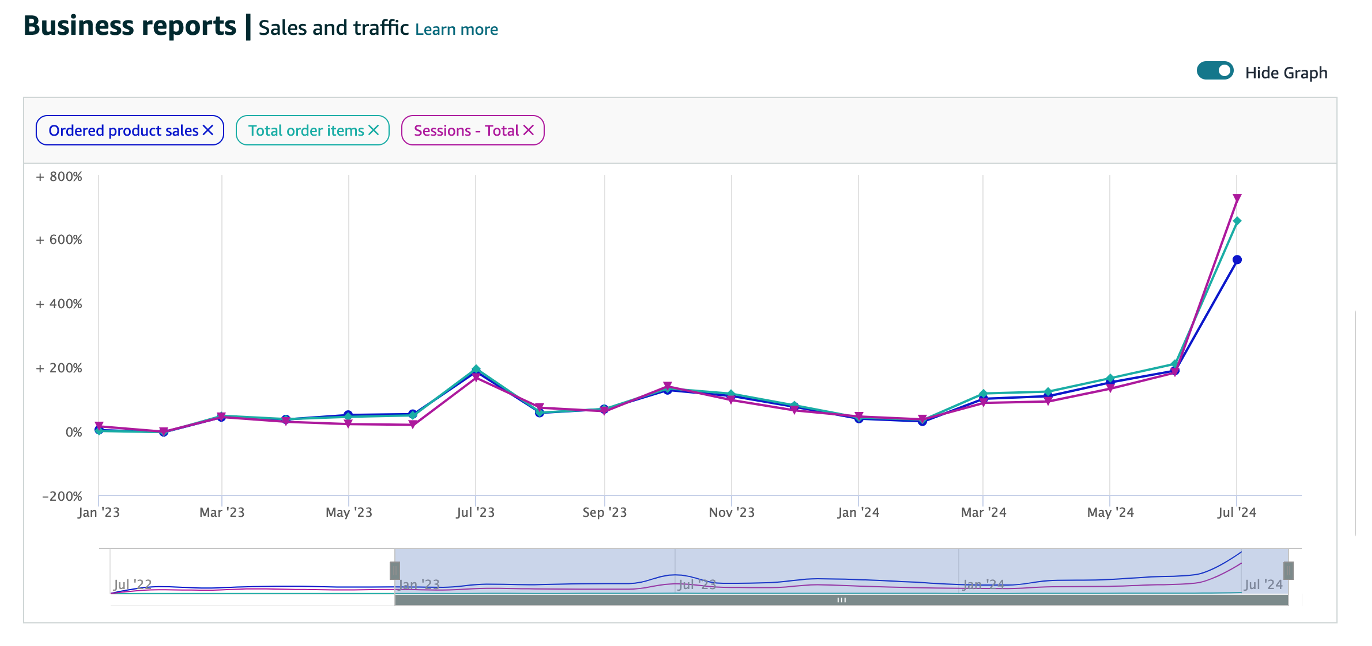
- ✅ July saw 500%+ YoY growth in orders, sessions, and traffic
- ✅ Organic sales jumped $128K in June alone
What Changed?
We started with a thorough analysis of the account to identify where the real opportunities were. The campaigns were structured reasonably well, but there were clear areas where budget was being wasted, high-potential keywords weren't getting enough exposure, and scaling opportunities were being missed. We needed to maximize ROI first, then scale aggressively on what worked.
Understanding the Product and Market
Before implementing any changes, we invested time in deep product and market analysis:
- Thoroughly analyzed the product to understand its unique features and how it differentiated from competitors in the market
- Conducted comprehensive market research to assess current market share and identify growth potential
- Mapped out the competitive landscape to understand where the brand could win
- Used these insights for accurate forecasting and to build a data-driven growth strategy
This foundation gave us clarity on where to focus efforts and how aggressively we could scale.
Foundation: Identify and Eliminate Wasted Spend
Before scaling, we needed to stop the bleeding:
- Discovered 50+ inactive or low-spend campaigns spending just a few dollars each without generating any sales—individually they looked insignificant, but collectively they were wasting significant budget
- Conducted comprehensive search term audits to find non-converting, irrelevant keywords
- Added aggressive negative targeting across auto, broad, and phrase match campaigns
- This freed up significant budget to reinvest in high-performing areas
We reinvested this saved budget to scale winners.
Campaign Optimization for Maximum ROI
With waste eliminated, we optimized the core campaign structure:
- Restructured campaigns to separate high-performers from testers, giving top keywords the budget they deserved
- Segmented by match type to prevent broad match from eating exact match budgets
- Kept keyword density low (under 20–30 targets per campaign) to maximize individual keyword exposure
- Regular bid adjustments every 3–7 days based on performance data
This gave us tight control and clear performance data to guide scaling decisions.
Match Type Optimization
We reallocated budget based on match type performance:
- Scaled exact match aggressively for proven high-intent keywords
- Used broad and auto strategically for discovery, but with tight negative keyword controls
- Phrase match was evaluated carefully—scaled where it worked, cut where it didn't
- This ensured budget went to the match types delivering the best ROAS for each product
Placement Optimization: Top of Search and Rest of Search
Placement analysis revealed where we were winning and where we were overpaying:
- Increased bids aggressively on top of search for high-converting keywords—this placement consistently delivered lower ACOS despite higher CPCs
- Adjusted rest of search bids based on conversion performance by product
- Used placement modifiers to capture more impression share in winning placements
Better placement strategy meant more high-quality traffic at better efficiency.
Budget Optimization
We implemented smart budget allocation:
- Set daily budgets based on product performance and profit margins
- Used budget rules to prevent overspend while capturing demand spikes
- Monitored budget pacing daily and adjusted proactively to avoid running out of budget during high-traffic periods
- Allocated larger budgets to proven performers, smaller testing budgets to new opportunities
This ensured we were always spending on what delivered results.
Scaling What Worked
Once we'd optimized for efficiency, we scaled aggressively:
- Pushed harder on strong product categories and high-performing keywords by increasing budgets significantly
- Added more relevant keywords to capture additional search volume we were missing
- Increased impression share on winning keywords through higher bids and better placements
- Expanded to adjacent keywords and long-tail variations that were underexploited
We didn't scale blindly—we scaled what the data showed was working.
Additional Growth Strategies
We expanded beyond basic keyword optimization:
- Implemented retargeting campaigns to recapture browsing traffic
- Launched competitor targeting on high-traffic competitor ASINs
- Tested video ads to improve conversion rates and stand out visually
- Ran controlled experiments on new placements, ad formats, and targeting strategies
These additional levers unlocked new growth beyond traditional keyword campaigns.
Product Expansion
We didn't just optimize existing products—we expanded strategically:
- Pushed harder on top-performing products with proven demand
- Identified underutilized product categories and built focused campaigns to scale them
- Allocated budget based on profit margins and growth potential, not just current sales
This diversified revenue sources and reduced dependence on any single product.
The results speak for themselves. In just four months, we took the account from $1.45M to over $2M in monthly sales—a 43% increase—while improving ACOS from 17.9% to 16.9%. June saw 88.6% YoY growth, and July metrics exceeded 500% YoY in key areas. The account wasn't just growing—it was scaling profitably with room to push even harder.
Key Takeaway: Explosive growth comes from eliminating waste first, optimizing for efficiency, then scaling aggressively on what's proven to work—while continuously testing new opportunities.