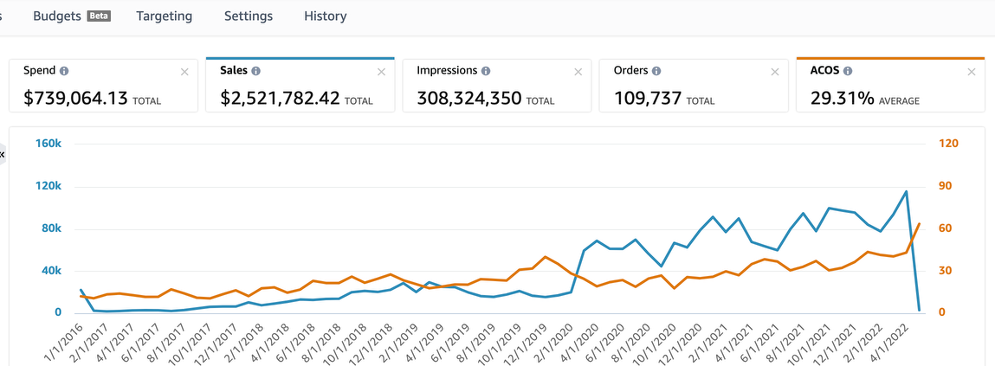
When we took over this account in mid-March, the brand was doing around $85K per month in PPC sales. But they'd hit a plateau. The campaigns were running, but there was no clear plan to grow. We saw the opportunity to scale significantly while staying profitable, but it required expanding reach, improving product rankings, and treating each product differently based on how it was actually performing.
We knew we could push this account higher. Within 30 days, we'd grown revenue by 27%. By day 45, the account hit its highest-ever sales at over $115K.
The Outcome
First 30 Days:
- ✅ 27% increase in sponsored ads revenue
- ✅ 6% increase in unique customers, leading to 26% increase in repeat purchases - building long-term customer value
- ✅ Consistent week-over-week growth averaging 8.4%
After 45 Days:
- ✅ 30% growth in monthly PPC revenue (from ~$85K to $115K+)
- ✅ 13% growth in unique customers - expanding the customer base while scaling
- ✅ Account hit its all-time highest sales month
- ✅ All growth achieved while maintaining profitability targets
The account wasn't just growing - it was growing sustainably with better visibility and stronger customer acquisition.
How We Did It
We started with a full in-depth SWOT analysis to see exactly where the opportunities were. The account was doing fine, but it wasn't reaching its full potential. Ad coverage had gaps, product rankings could be better, and every product was being treated the same way regardless of performance. We built a plan to expand reach while keeping the account profitable.
1. Complete Ad Type Coverage
We expanded beyond what was currently running to reach customers at every stage:
- Looked at which ad types were missing or not being used enough and filled those gaps
- Added Sponsored Brand campaigns to capture top-of-search spots and build brand awareness
- Set up Sponsored Display for retargeting and reaching new audiences - bringing back people who browsed but didn't buy
- Made sure each ad type got the right amount of budget based on its performance, not just equal splits
Full ad type coverage meant we were reaching customers when they were discovering products, comparing options, and ready to buy - not just one stage.
2. Push for Higher Rankings
Better rankings mean more organic sales and better ad performance, so we made this a priority:
- Found products that could rank higher (good conversion rates but low organic visibility)
- Put more ad budget behind these products to drive sales and improve their Best Seller Rank
- Used exact match campaigns with strong bids on main keywords to consistently win top-of-search placements
- Tracked ranking changes every week and adjusted spend to keep the momentum going
Better rankings created a snowball effect - more organic visibility led to more sales, which pushed rankings even higher.
3. Different Strategies for Different Products
Not every product grows the same way, so we treated them differently:
- Grouped products into tiers: top performers (scale hard), growers (test and watch closely), and poor performers (cut back or pause)
- Built separate strategies for each tier - top performers got most of the new budget, growers got testing budget with close monitoring
- Adjusted bids, budgets, and targeting for each product based on its own ACOS and conversion rate
- This meant we scaled what was working and didn't waste money trying to force poor performers to work
4. Expanding Reach and Visibility
We focused on getting more impressions in the places that mattered:
- Looked at placement reports to see which placements were performing highest
- Raised bids on placements that were converting well to capture more of that traffic
- Added more keywords including related search terms and long-tail variations that were being missed
- Used product targeting to show up on competitor listings where we had better reviews, pricing, or features
More visibility in the right spots meant more qualified Shoppers seeing the products.
5. Focus on Getting and Keeping Customers
Growth isn't just about revenue - it's about building a customer base:
- Watched new customer metrics closely to make sure growth was coming from new Buyers, not just repeat customers
- Used retargeting to bring back one-time Buyers and turn them into repeat customers
- Tracked how much customers were worth over time to make sure we weren't overspending to acquire them
The 26% jump in repeat purchases showed we were not only getting new customers - we were building loyalty.
6. Keeping Growth Profitable
We focused on profitable scaling, and kept tight controls:
- Set clear ACOS targets for each product based on margins and business goals
- Used automated rules and daily checks to catch budget overruns or ACOS spikes early
- Scaled hard where ACOS was good, pulled back where it wasn't
- Checked overall TACOS regularly to make sure the whole account stayed healthy and profitable
The growth was fast but controlled. We averaged 8.4% growth week-over-week, which added up to 30% monthly growth in just 45 days. The account went from being stuck at $85K to breaking its all-time record at over $115K - and it was set up to keep growing.